
Medical imaging has always been a cornerstone of diagnosis and treatment planning. Today, artificial intelligence (AI) is transforming how clinicians interpret these images, making workflows faster and more precise. For healthcare providers seeking technology that works smoothly without heavy IT demands, AI-powered diagnostics offer a promising path forward.
Automation in medical imaging is not just about speed. It enhances accuracy, reduces human error, and supports collaboration across locations. Cloud-based platforms like OmniPACS are leading the way by integrating AI tools that streamline image management and analysis, all accessible from any device.
This article explores how AI diagnostics are changing medical imaging, the benefits and challenges of automation, and how cloud-based solutions can help clinics and imaging centers modernize their workflows without complicated setups or costly infrastructure.
Understanding AI Diagnostics in Medical Imaging
What AI Brings to Medical Imaging
AI diagnostics use machine learning algorithms to analyze medical images such as X-rays, MRIs, and CT scans. These systems can detect patterns and anomalies that might be subtle or time-consuming for human eyes to catch. By automating routine tasks, AI frees radiologists to focus on more complex cases. This not only enhances the efficiency of the diagnostic process but also allows for a more thorough examination of cases that require human expertise, ultimately leading to improved patient care.
Key AI capabilities include image segmentation, lesion detection, and abnormality classification. These tools assist in early diagnosis and can flag urgent findings, improving patient outcomes through faster intervention. AI’s ability to learn from vast datasets means that it can continuously improve its accuracy and reliability over time. This adaptive learning process is crucial in a field where new techniques and findings emerge regularly, ensuring that AI systems remain at the forefront of diagnostic technology.
Automation in Workflow Management
Beyond image analysis, AI helps automate the entire imaging workflow. This includes image routing, prioritization, and report generation. OmniPACS incorporates AI-assisted workflows that reduce manual handling and speed up case turnaround times. By streamlining these processes, healthcare facilities can significantly reduce the administrative burden on their staff, allowing them to dedicate more time to patient interaction and care.
Automation also supports permissions-based sharing, enabling secure collaboration between specialists and referring physicians. This flexibility is especially valuable for multi-location practices or ambulatory clinics that need seamless access to imaging data. AI-driven systems can help ensure regulatory compliance by maintaining accurate records and audit trails, which are essential in today’s healthcare environment. As these technologies evolve, they promise to enhance not only operational efficiency but also the quality of care delivered to patients, paving the way for a more integrated and responsive healthcare system.
Benefits of AI-Powered Medical Imaging Platforms
Faster Setup and Lower IT Overhead
Traditional on-premises PACS require significant IT resources for installation, maintenance, and upgrades. Cloud-based AI platforms eliminate much of this burden. Practices can get started quickly with subscription models that scale according to monthly case volumes.
With no local servers to manage, clinics save on hardware costs and reduce downtime. The cloud infrastructure ensures continuous updates and compliance with security standards like HIPAA and GDPR, without extra effort from the user. This means that healthcare providers can focus more on patient care rather than getting bogged down by technical issues, allowing for a more streamlined workflow. The reduced need for in-house IT staff can free up financial resources that can be redirected towards improving patient services or investing in further technological advancements.
Device-Anywhere Access and Collaboration
AI-powered cloud PACS enable clinicians to view and share images securely from any device with internet access. This convenience supports remote consultations and second opinions, improving patient care coordination.
For orthopedic and ambulatory practices, this means faster decision-making and less waiting for image availability. The diagnostic viewer included in the OmniPACS platform is FDA-cleared, ensuring reliable image interpretation wherever the clinician is located. The ability to collaborate in real-time with specialists across different locations enhances the diagnostic process, allowing for more comprehensive evaluations and treatment plans. As a result, patients benefit from quicker diagnoses and more personalized care, which can lead to improved health outcomes and higher satisfaction rates. The integration of AI also aids in identifying patterns and anomalies in imaging data, further supporting clinicians in making informed decisions.
Challenges and Best Practices When Adopting AI Diagnostics
Balancing Automation With Human Expertise
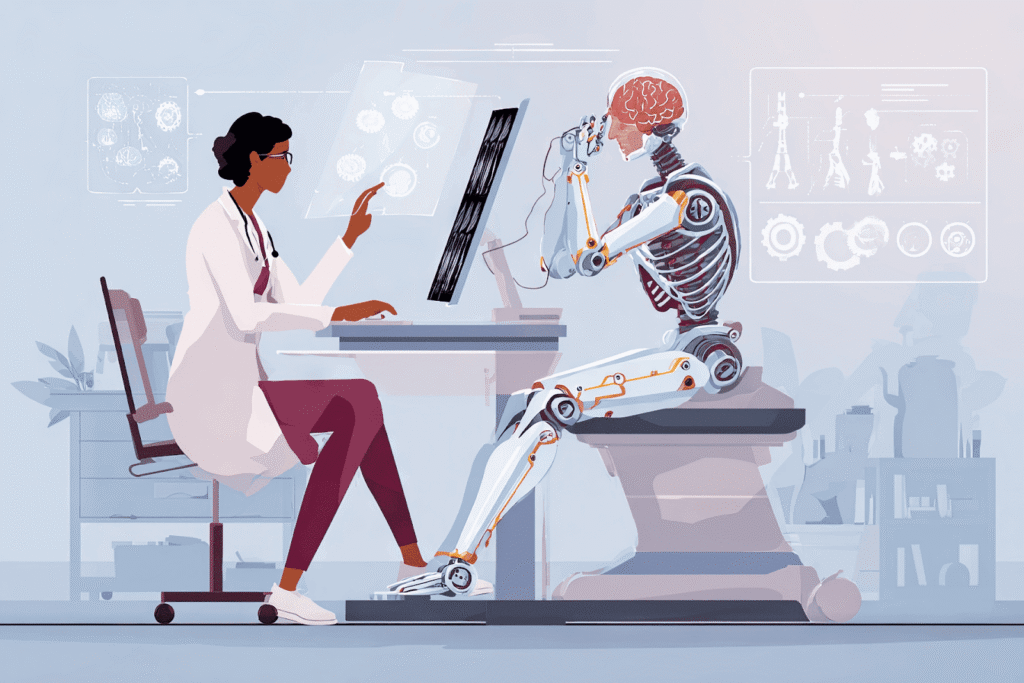
While AI can automatically identify many findings, it is not a replacement for skilled radiologists. The best results come from combining AI insights with clinical judgment. Practices should view AI as a tool that supports, rather than replaces, human expertise.
Ensuring Data Security and Compliance
Medical images contain sensitive patient information, so security is critical. Cloud platforms must meet strict regulatory standards. OmniPACS, for example, emphasizes compliance with HIPAA and GDPR, providing encrypted storage and controlled access to protect data privacy.
Training and Workflow Integration
Successful AI adoption requires staff training and careful integration into existing workflows. Choosing a platform with intuitive interfaces and AI-assisted tools helps minimize the learning curve. Cloud PACS solutions that offer seamless DICOM routing and image management simplify these transitions.
OmniPACS Solutions for Modern Medical Imaging
Cloud-Based PACS With AI Assistance
OmniPACS offers a cloud-native PACS platform designed for orthopedic clinics, ambulatory practices, and imaging centers. It supports storing, viewing, and sharing medical images without the need for on-premises servers.
The platform’s AI-assisted workflows automate image routing and prioritization, reducing manual tasks and speeding up diagnosis. Its subscription pricing model adjusts based on monthly case volumes, making it accessible for practices of all sizes.
Diagnostic and Non-Diagnostic Viewers
OmniPACS includes an FDA-cleared diagnostic viewer for accurate image interpretation and a web-based non-diagnostic viewer for easy sharing with referring physicians or patients. Both viewers are accessible from any device, supporting flexible and collaborative care.
Security and Compliance Features
Security is built into every layer of OmniPACS. The platform ensures encrypted data transmission and storage, role-based access controls, and compliance with HIPAA and GDPR regulations. This focus on security helps practices protect patient privacy while benefiting from cloud convenience.
Embracing AI for Smarter Medical Imaging
Automation and AI are reshaping medical imaging by making it faster, more accurate, and easier to manage. Cloud-based platforms like OmniPACS combine AI-assisted workflows with secure, device-anywhere access to meet the needs of modern healthcare providers.
For clinics and imaging centers looking to reduce IT overhead and improve collaboration, adopting AI diagnostics via cloud PACS is a practical step. The technology supports better patient outcomes and streamlines daily operations, making advanced imaging accessible to more practices.
Frequently Asked Questions About AI Diagnostics in Medical Imaging
How does AI improve the accuracy of medical imaging diagnosis?
AI algorithms analyze images to detect subtle patterns and abnormalities that the human eye may miss. This enhances diagnostic accuracy by providing a second layer of review and reducing human error.
Can AI replace radiologists in interpreting medical images?
No, AI is designed to assist radiologists by automating routine tasks and highlighting areas of concern. Final diagnosis and clinical decisions remain the responsibility of trained medical professionals.
What are the advantages of using a cloud-based PACS like OmniPACS?
Cloud-based PACS offer faster setup, lower IT maintenance, and anywhere access to images. They scale with practice needs and include security features that protect patient data while supporting collaborative workflows.
Is patient data safe when stored in the cloud?
Yes, reputable cloud PACS platforms use encryption and access controls and comply with regulations such as HIPAA and GDPR to ensure patient data is secure and private.
How does AI assist with workflow in medical imaging?
AI automates tasks such as image routing, prioritization, and preliminary analysis, thereby speeding up case handling and reducing manual errors, allowing clinicians to focus on interpretation and patient care.